Food pantries
Ask about appointment rules, household information, choice pantry options, delivery, and whether fresh items are available that day.
Food Access
Food access is local, and local systems can be uneven. A pantry may be open only twice a week. A meal site may pause service on holidays. A community fridge may be full in the morning and empty by late afternoon. The most useful habit is to treat each option as a lead to verify: call, check the latest post, ask a librarian, or contact a school or clinic desk before spending time and energy on travel.
When calling, keep the questions concrete: opening hours, address, documents, household limits, whether someone else can pick up, and what kind of food is usually available. If transportation is the barrier, ask directly about delivery, mobile pantry routes, transit vouchers, or nearby partner sites.
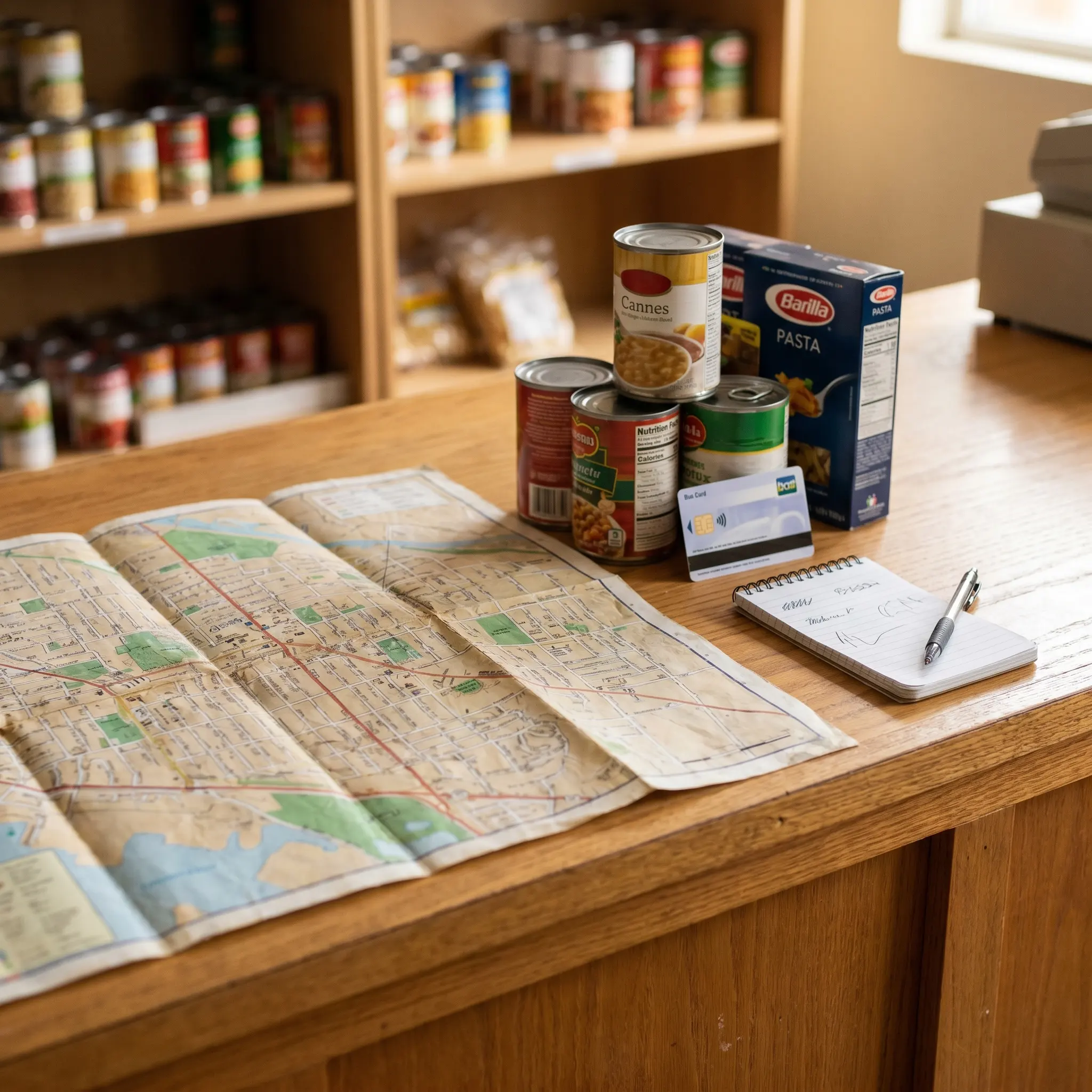
Ask about appointment rules, household information, choice pantry options, delivery, and whether fresh items are available that day.
Look for soup kitchens, senior meals, school district pickup, shelters, and neighborhood meal calendars.
Check recent updates before traveling because stock, hours, and host rules can change quickly.
Libraries, clinics, schools, and local nonprofits may help with applications or replacement cards.
“I am looking for food support for this week. Are you open today, and do I need an appointment or documents? Can you tell me what time is best to arrive, whether fresh food is available, and whether there are partner locations if I cannot get there?”