No-cook shelf
Crackers, nut butter, canned fish, shelf-stable milk, applesauce, fruit cups, ready beans, and bottled water.
Emergency Meals
Emergency meal planning is not about perfect nutrition. It is about getting enough safe, tolerable food into the next few hours while a more reliable supply is arranged. Choose foods that require little equipment, are familiar to the person eating, and can be paired into a small meal: soup and bread, rice and beans, oats and fruit, crackers and tuna, yogurt and cereal, or a ready meal from a community site.
If someone has had very little food for an extended period, or has symptoms like fainting, confusion, chest pain, severe weakness, persistent vomiting, or signs of dehydration, seek urgent local medical help. This page supports meal logistics; it does not replace medical assessment.
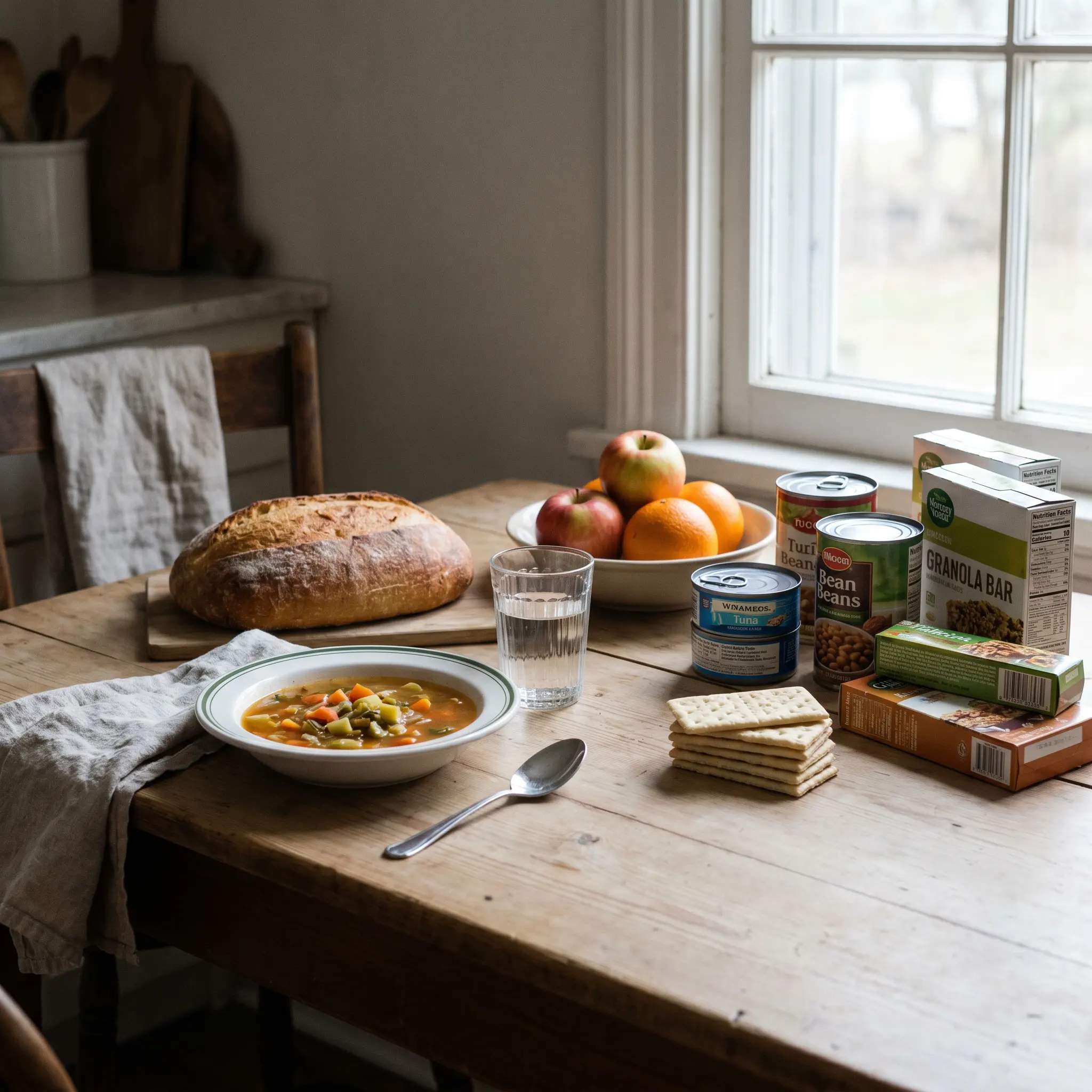
Crackers, nut butter, canned fish, shelf-stable milk, applesauce, fruit cups, ready beans, and bottled water.
Microwave rice, canned beans, frozen vegetables, broth, oil, and a mild seasoning packet.
Small regular meals, fluids, soft foods, and medical support when symptoms are severe or prolonged.